
Searching Hocking County Civil Dockets
Routing comes first. The Hocking County Clerk’s Internet Inquiry handles Common Pleas Civil and Domestic filings, while the Hocking County Municipal Court Case Search is the separate route for Municipal civil matters. Probate runs through its own CaseLook record-search channel. Pick the wrong division and the results mean nothing. Match the court as well as the name or number.
Start with an official case number when you have one. Never guess at a year or a case-type prefix, because Hocking does not publish a single civil case-number format that fits every division. In Municipal Court, filters for name, case type, court, division, and filing date can narrow a crowded results list. Common Pleas is different. Its ordinary online series begins in 1996. Older civil records may take a follow-up call to the clerk.
- Identify whether the matter is Common Pleas civil or domestic, Municipal civil, or Probate.
- Open the matching official search channel and enter the available official name or case number.
- Use the court, division, case-type, party-type, or date filters that the Municipal form displays when they help separate similar results.
- Read the most recent filing, order, or setting in the matching case record.
- Contact the clerk holding the file if the record is older, incomplete, restricted, or needs certification.
Hocking Common Pleas Civil Internet Inquiry
The Hocking County Clerk of Courts lists Civil and Domestic filings within its Internet Inquiry coverage. The ordinary record series goes back to January 1, 1996. Older domestic files can still surface, though. A post-decree action filed years later pulls an old case into the online system, so a missing date range is never proof the courthouse file never existed. For older-record and copy questions, contact the Legal Division at 1 East Main Street. You can also call (740) 385-2616.
One caution about channels. The county’s electronic filing manager exists for filing documents, not for public case lookup. The Common Pleas portal remains the record route. Once the clerk processes an eligible public e-filed document, Local Rule 2 makes it available on the clerk’s Internet site.
The Clerk’s own description of the Internet Inquiry states the civil coverage and the historical starting point. On the jurisdiction side, one statute controls. Ohio Revised Code section 2305.01 spells out Common Pleas original jurisdiction. That jurisdiction sits above the exclusive jurisdiction of inferior courts.
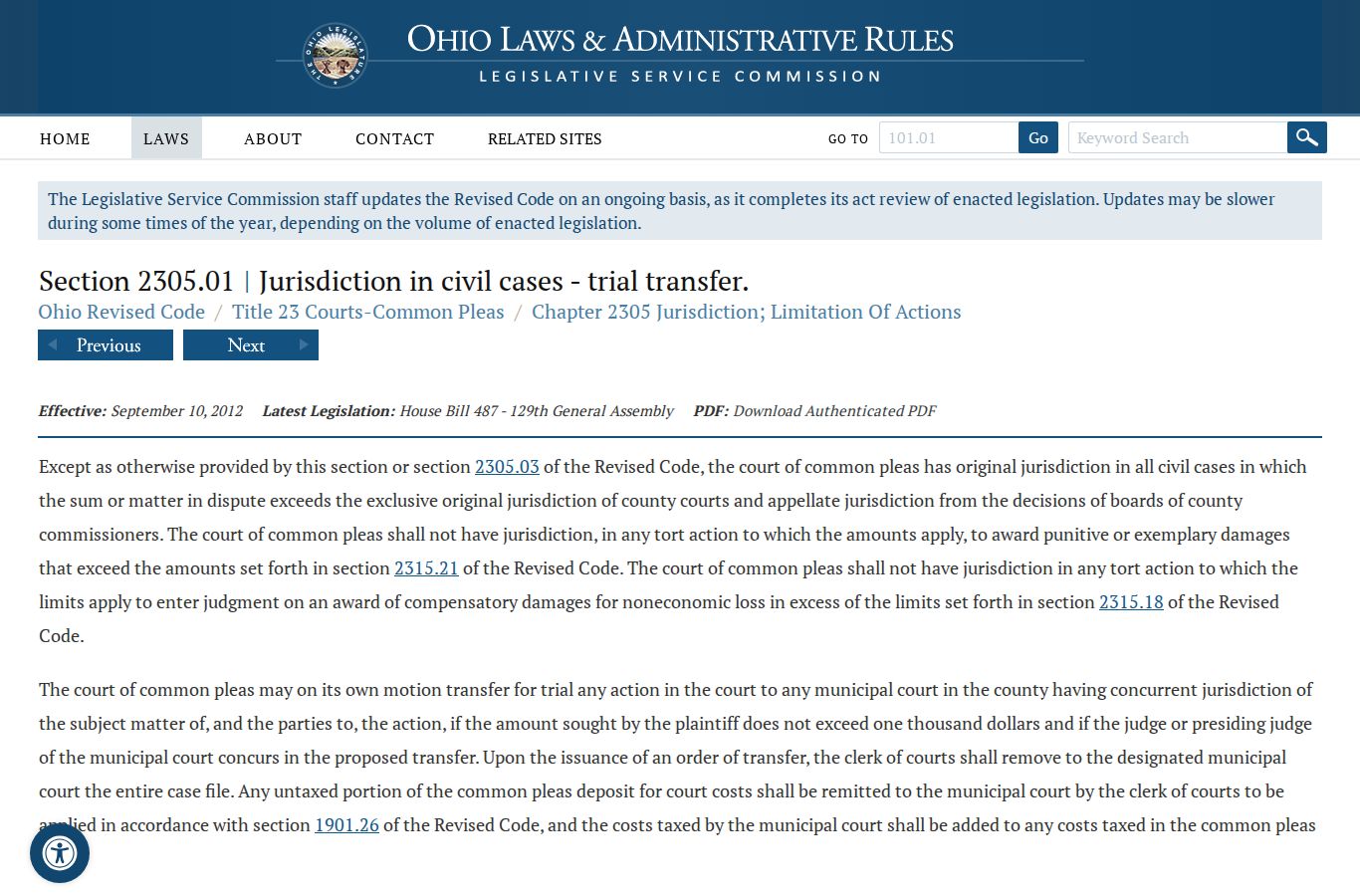
State law fixes Common Pleas jurisdiction. For the practical civil docket search channel, the Clerk’s local portal is the tool to use.
Inside a Hocking County Civil Docket
A civil docket is the running record of procedural events in one case. It can show the parties, the case type, and the full filing history. Case-management activity and hearing settings appear as the matter moves along. Later orders or judgment entries join them. Hocking has not published a local action-code dictionary. Read the categories the court does provide. Resist assigning meaning to an abbreviated status the court never defined.
| Court and division | Identifies whether the record belongs to Common Pleas Civil or Domestic, Municipal Civil, or another court channel. |
|---|---|
| Parties and case type | Shows the case caption or roles and the category used by the court, subject to public-access limits. |
| Filings and motions | Records activity such as a complaint, answer, motion, proposed entry, or other filed action when shown. |
| Settings | Can show scheduling, status, pretrial, mediation, trial, or other case-management events. |
| Order or judgment | Records a court action that may resolve an issue or the case; a scheduled date is not itself a judgment. |
Need a document image or a formal copy? Follow the procedures of the court that holds the record, since public docket access and access to each underlying document are two different things.
Hocking Municipal Civil Matters
The Hocking County Municipal Court Civil Division posts a clear statement. Its jurisdiction reaches all of Hocking County. A civil action may be filed there when total damages are $15,000 or less. That figure is a routing guide. It is not a rule that every matter under the cap belongs in Municipal Court. Ohio Revised Code section 1901.17 supplies the state authority behind the monetary limit.
The Municipal public search form offers plenty of filters. Court Types, Causes of Action or Case Types, Party Types, Division, and opened or closed date ranges all help narrow results, alongside name and number fields. Use them to isolate a Municipal civil record. Is the web view not enough? The Municipal clerk will run a record search by fax, email, or the website channel. The division’s official jurisdiction and fee page sets out the local jurisdiction statement.
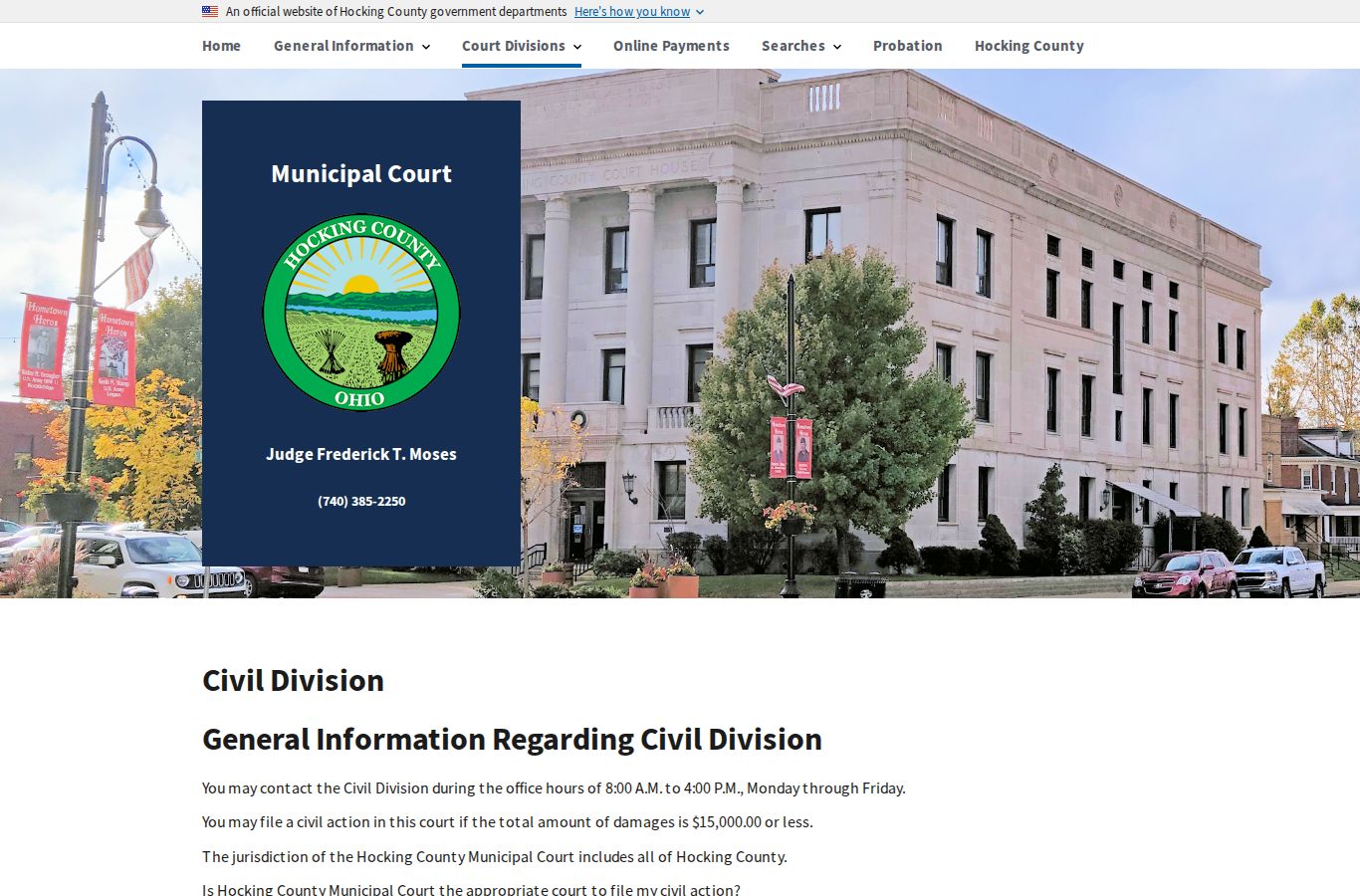
The Municipal channel covers the whole county, but the court and case type still decide which docket you search.
Civil Case Types on the Docket
Hocking civil records are not housed in one division. Common Pleas lists its civil and domestic coverage. That coverage includes general civil cases, divorces, dissolutions, custody modifications, and child-support modifications. Municipal Civil keeps its own limited-jurisdiction docket. Probate stands apart again, handling estates, guardianships, adoptions, name changes, and related proceedings. Treat case type as a routing clue, then, rather than a label you can search across every Hocking office at once.
- Common Pleas general civil filings
- Common Pleas domestic matters, including divorce or dissolution-related activity
- Municipal civil matters within the court’s jurisdiction
- Small-claims matters in the Municipal channel
- Probate proceedings in the Probate Court record system
A filed civil matter can generate complaints, responses, motion practice, hearing settings, orders, and collection-related entries. The labels you see depend on each court’s own record system. Ohio Revised Code section 1901.18 is the state source for Municipal Court subject-matter jurisdiction.
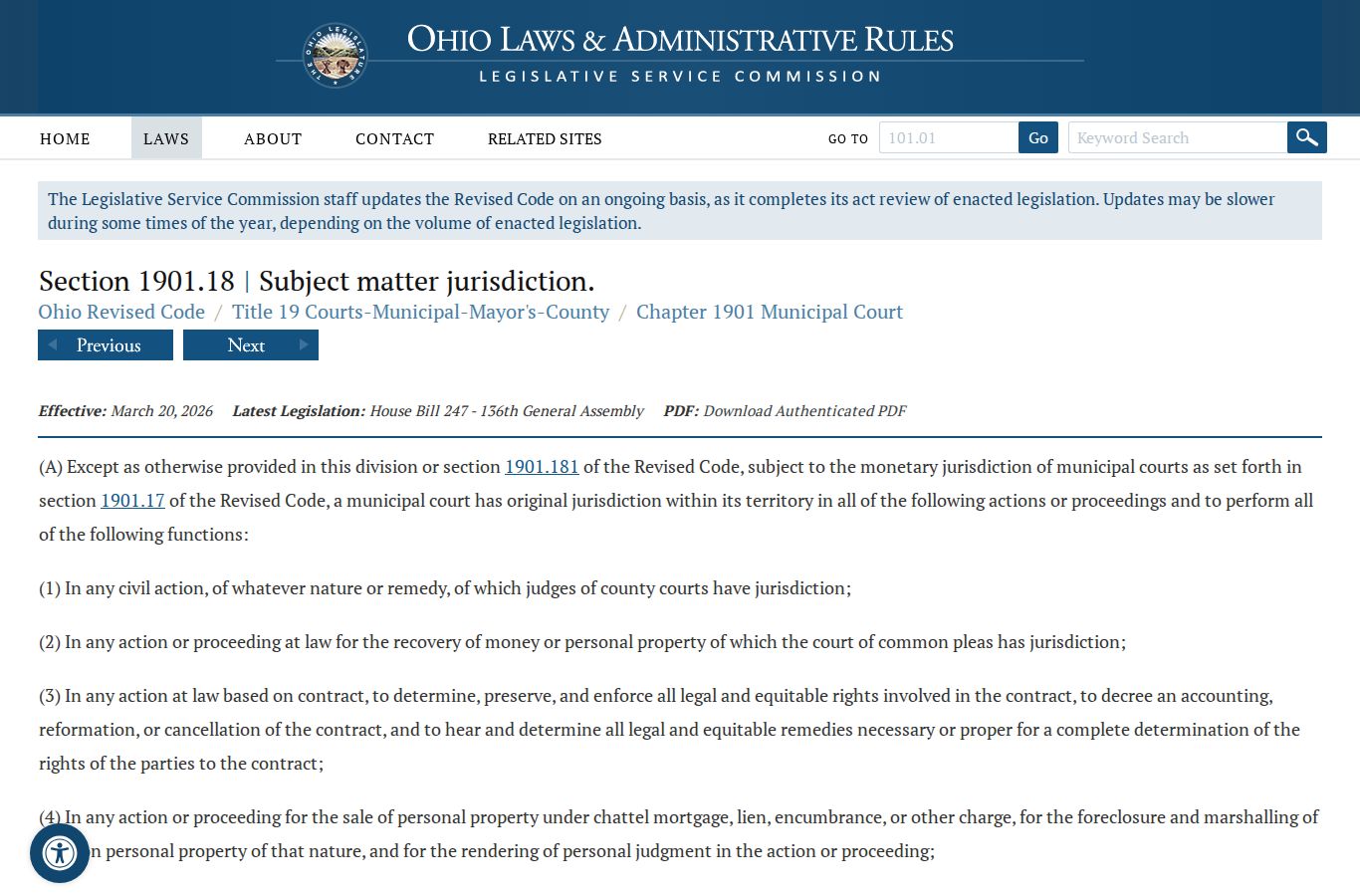
That statutory context is one more reason to settle the court and case type first. A Hocking civil search goes faster when the routing is right from the start.
Hocking Civil Docket Case Track
A Hocking County civil docket rarely shows just one trial date. The judge often holds a scheduling conference after service, or issues a scheduling entry instead. From there, the local material lays out a 12-month primary track. Many things can appear along that path. Case management, deadlines, pretrial activity, and mediation show up. So do motion practice, trial, judgment, and later execution entries. Reading the sequence matters. It is how you tell a routine case-management step from a final action. That difference is not always obvious from a single entry.
The Hocking Common Pleas Local Rules set out the court's own scheduling and case-management practice. That guidance covers these civil dockets directly.
For the money limit on the Municipal Court side, turn to the statute. Ohio Revised Code section 1901.17 is the one to read.
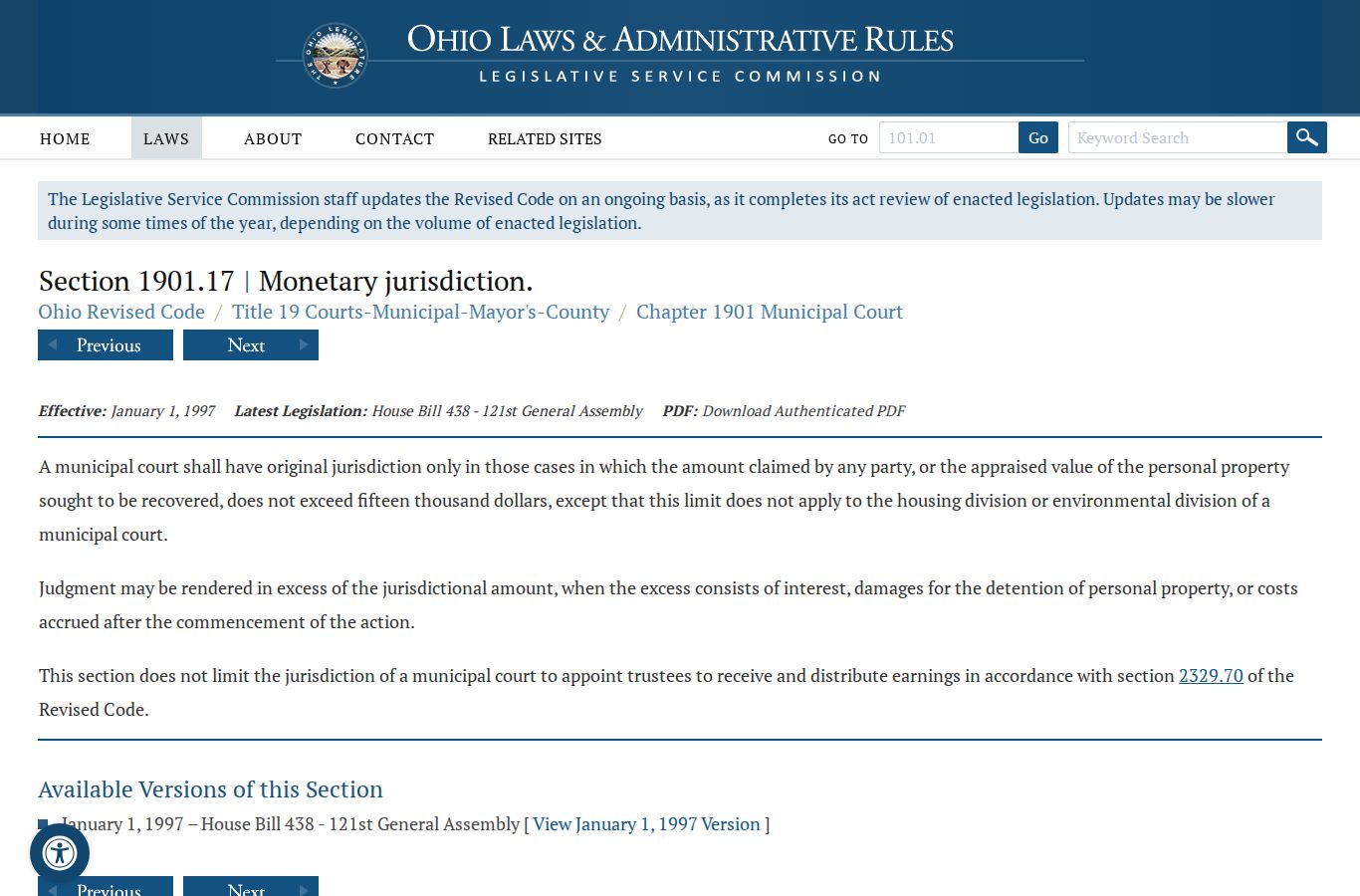
Those two jurisdiction sources point to the same practical lesson. A Hocking civil docket search works best when you route the case to the right court before typing in a name.
Civil Docket Settings and Hearings
Civil settings come in several forms. A Hocking County case might list many things. Examples include a scheduling conference, a case-management conference, a pretrial, mediation, a motion hearing, or trial. A setting means the court put a procedural event on the calendar. It does not mean the case is over. Common Pleas posts a Judge Docket and a separate Magistrate Docket. You can cross-check a current setting against the case record.
A continuance in Common Pleas takes a written motion and a proposed entry. Always look for the latest setting plus any continuance or modified date before trusting an older notice. The Hocking County Court Dates page collects the local calendar channels without treating a standing schedule as the final word on any case.
Civil Docket Access Rules
Hocking Common Pleas Local Rule 2 opens the door to online access for processed public e-filed documents. It also builds in a fallback. The Internet site might be down. The clerk might not provide an unsealed document online. In either case, the public can review it at the clerk's office by computer terminal, paper, or microfilm. Copy fees still apply. The Clerk lists $0.25 per ordinary page, and certifying runs $2 per page.
Access has limits, too. The Ohio Rules of Superintendence 44 and 45 define court records, access, and restrictions for the whole state. Sealed material stays out of a normal online lookup. Expunged material and anything redacted under the local rules stays out as well. Probate CaseLook results can also lag at least 24 hours. Probate tells anyone needing verified information to make a request. A visit to the court in person works too.
Jurisdiction and access sources:
Ohio Revised Code section 1901.17 supplies the Municipal Court monetary-jurisdiction rule.
Ohio Revised Code section 2305.01 describes Common Pleas original jurisdiction above inferior courts’ exclusive jurisdiction.
Hocking Common Pleas Local Rule 2 supplies the online and in-office access route for unsealed public e-filed material.
Hocking Civil Docket Continuances
Think of a proposed entry as a draft court order that rides along with a motion when the local rule calls for one. In Hocking Common Pleas civil practice, a party seeking a continuance must file a written motion and proposed entry. Nothing changes until the court acts on it. The old setting stands until then. Miss a trial, and the court may dismiss the claim for relief or take other action under the governing rules. The docket entry reflects the ruling, not the request itself.
- Scheduling entry
- A court entry that can set case-management deadlines and future events after service.
- Proposed entry
- A draft order submitted with a motion, including a continuance request when the Hocking rule requires it.
- Dismissal for want of prosecution
- A possible civil consequence when a party seeking relief does not attend trial or fails to prepare for required case management.
Municipal Civil fee categories also mention motions, judgment-debtor examinations, garnishments, execution, and transfers. Those are handy procedural terms, but the court has not published them as a universal docket-code dictionary.