
Searching Hocking County Criminal Dockets
Sort out the charge level before you touch a name search. The Hocking County Clerk of Courts, Legal Division keeps felony filings. Its Internet Inquiry searches them. Misdemeanors live in a different place entirely: the Hocking County Municipal Court Case Search. The split matters. A Municipal hit tells you nothing about a Common Pleas felony record. An empty result in one system never proves the other court has no case. Bring the right details with you: court paperwork, a party name, or the official case number. Hocking publishes no single criminal case-number format. So type the number exactly as printed instead of guessing at a prefix or year. Older Common Pleas records, restricted records, and filings still being processed call for a direct call to the record-holding clerk.
- Classify the matter as a felony, a misdemeanor, or a juvenile proceeding before selecting a search channel.
- Use Internet Inquiry for a Common Pleas felony, or the Municipal public search for a misdemeanor case.
- Use the narrowest official identifier available, then compare the court and case type before treating a result as a match.
- Read the activity in date order and check the latest setting, filing, or judgment entry.
- Ask the clerk that holds the case for an official copy when a court-issued record is needed.
Hocking Felony Dockets in Internet Inquiry
The Clerk’s Internet Inquiry reaches more than felony criminal filings from Common Pleas. Civil, domestic, Hocking-origin Fourth District, and certificate-of-judgment records sit in the same system. Online coverage starts January 1, 1996. An older felony docket can still exist on paper in the Legal Division. The Common Pleas Local Rules address that gap. When the web search cannot display unsealed public material, Rule 2 offers an office fallback instead.
Wondering which court handles what? The Common Pleas court information page explains the court’s role in felony matters. It also points case-file questions to the right court and clerk channel.
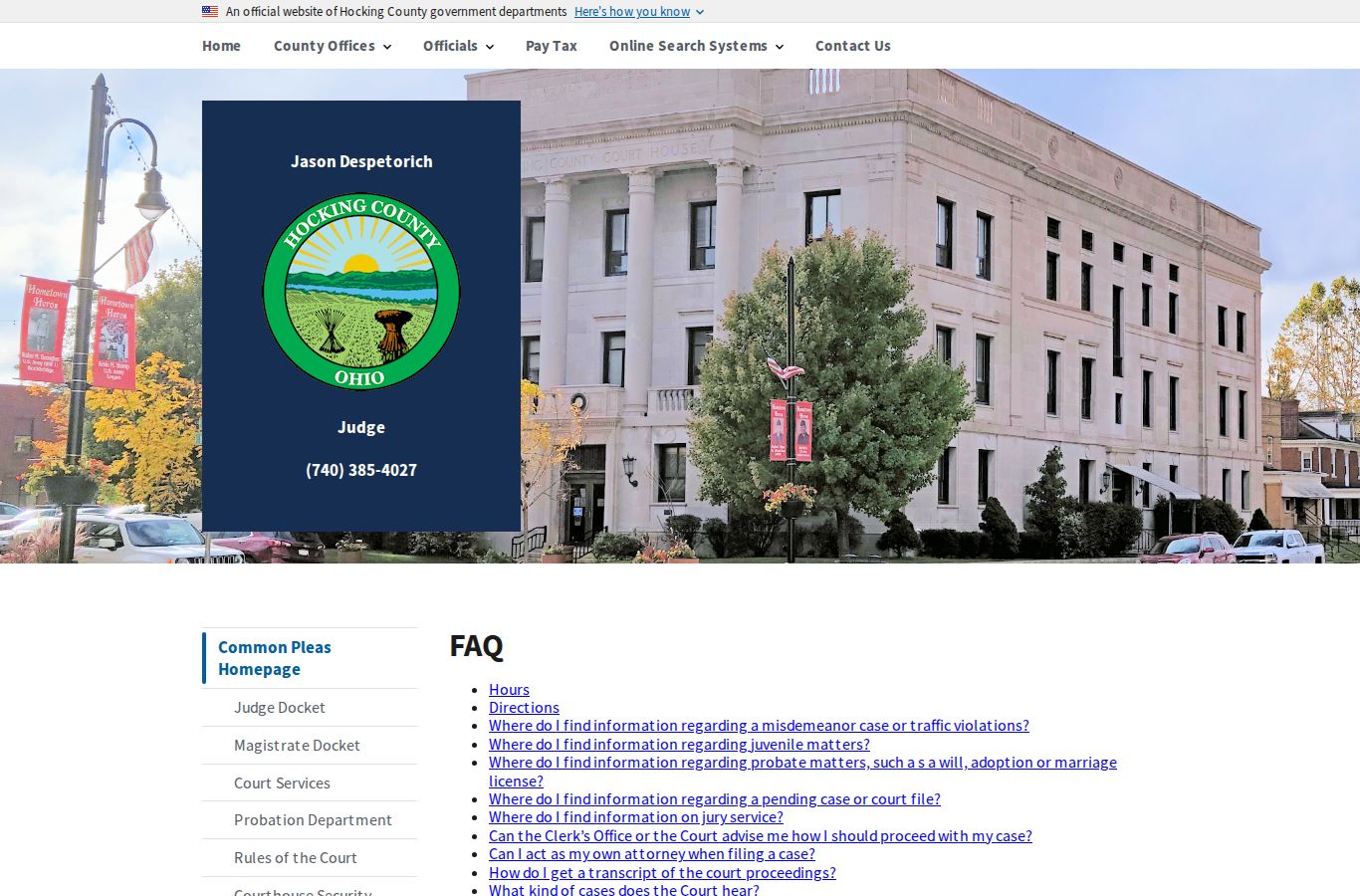
That court-specific setup is the reason a felony lookup belongs in the clerk's Internet Inquiry. The Municipal case form is simply the wrong drawer for this records search.
Inside a Hocking County Criminal Docket
Think of a docket as a chronological index. It is not a guarantee that every document behind it is public or viewable online. The safe reading points in Hocking are the court and division, the court-assigned case number, the filing or indictment date, hearing settings, motions and entries, and any judgment or disposition shown. Column layouts and status codes vary by system. Guessing at local labels is a bad habit. Read what is actually on the page rather than what a label might mean elsewhere.
| Court and division | Shows whether the entry belongs to Common Pleas felony practice or Municipal criminal practice. |
|---|---|
| Case number | Use the court-assigned identifier from official paperwork; Hocking has not published one universal format. |
| Charge or violation category | Identifies the matter at the level the public docket displays, subject to lawful redaction or restriction. |
| Settings and filings | May show arraignment, pretrial, trial, motions, entries, and later scheduled activity. |
| Judgment or disposition | Shows a court action when entered; a filed motion or a hearing date is not itself a final outcome. |
Always read the latest dated action in context. An older continuance may have been followed by a new setting, and a charge-related entry rarely shows every underlying document.
Hocking Municipal Misdemeanor Case Search
Hocking County Municipal Court keeps its misdemeanor criminal cases in a Criminal Division system of its own. The public search form filters by name, case number, warrant number, date range, court type, case type, party type, division, and statutes or charges. Citation, vehicle-tag, SAO, and arresting-case fields appear too. Just because a field shows up does not make it required. No universal local case-number pattern has been published.
Hearing terms on a Hocking criminal docket have plain meanings. Arraignment covers rights and charges, and a plea is entered there. A pretrial is a conference between the prosecutor and the defendant or counsel. Trial is the merits hearing, where evidence gets considered. For records, Municipal accepts fax, email, and website search only. The court sits at 105 West Hunter Street, phone (740) 385-2250.
Chasing a warrant? Use the Warrant Number filter in the official search. Do not assume a hearing date exists. The court’s General Information page tells a person with a warrant to turn themselves in during normal business hours. It also states plainly that no hearing gets scheduled for that person.
These hearing descriptions and procedures come straight from the Municipal Criminal Division information published by the court.
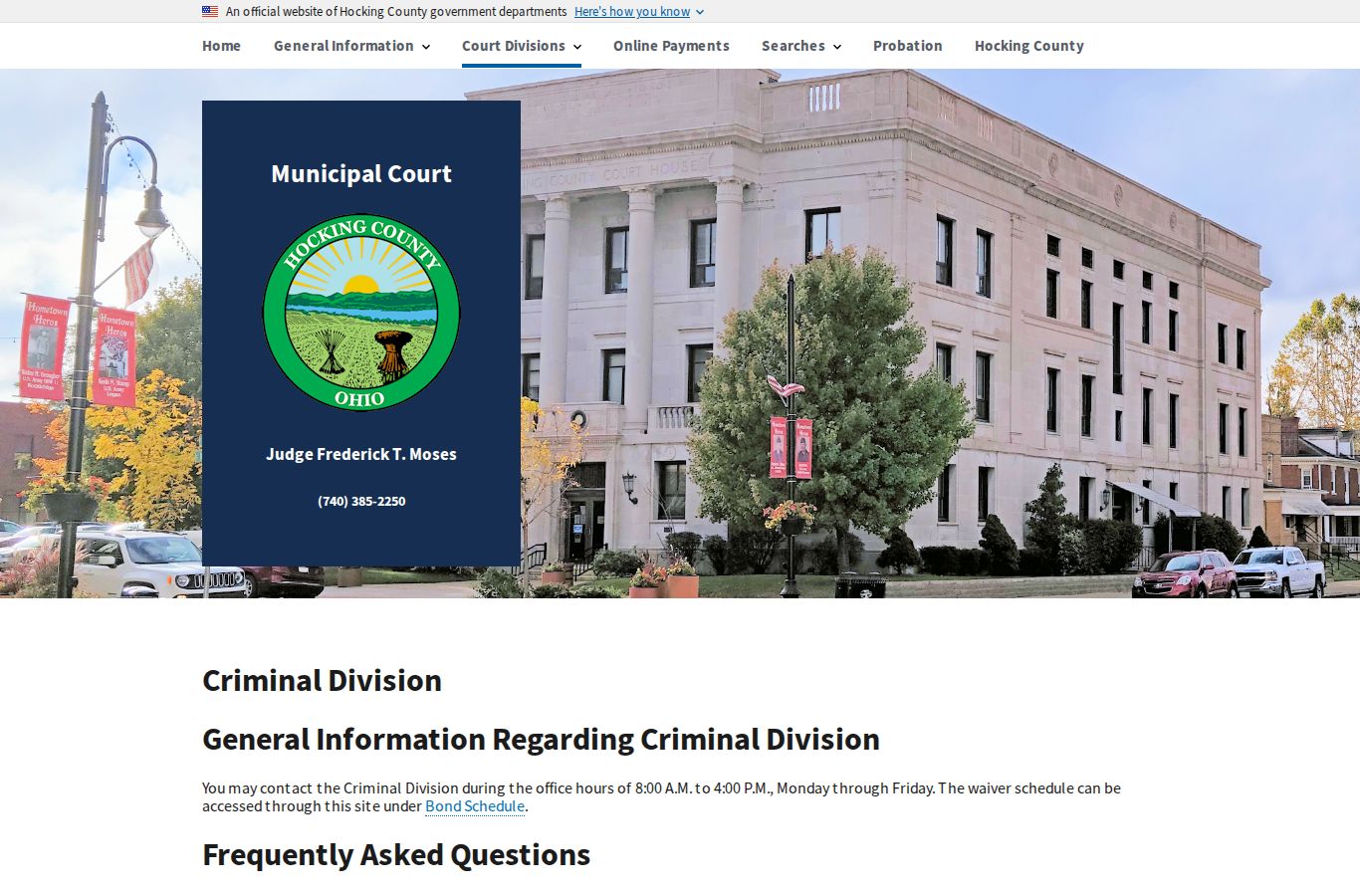
The court's own form and hearing descriptions make it easier to tell a current setting from a final judgment.
How a Criminal Case Moves
A Hocking criminal case can move through charging or indictment, arraignment, pretrial work, a plea or trial, a judgment entry, sentencing, and an appeal. The sequence depends on the court and the facts. In Common Pleas felony practice, the local rules describe summons and warrant paths to arraignment, and the clerk processes bonds. Municipal criminal cases work differently. There, the court directs people with a scheduled appearance to report to the bailiff. They sign in on arrival.
Docket flow: Charge or Indictment › Arraignment › Pretrial › Plea or Trial › Judgment Entry › Sentencing or Appeal
Every stage is procedural. A pretrial setting or a motion entry is not a final disposition until a later court action says so.
Hocking Criminal Secret-Indictment Rule
A blank result can have a legal explanation. Under Hocking Common Pleas Local Rule 44.05, an indictment stays secret until the clerk dockets it. The prosecutor may ask for continued secrecy until arrest. During that permitted period, a normal public Hocking criminal docket search may not yet show the felony. That gap is not proof the matter is absent. And it is never a reason to chase restricted information through some other channel.
When a case is not visible: Check the court that has jurisdiction, then ask its clerk whether the record is older than the online series, not yet processed, restricted, or held in another division.
Ohio Revised Code section 2953.32 sets out when criminal sealing and expungement applications are allowed and which ones the law excludes.
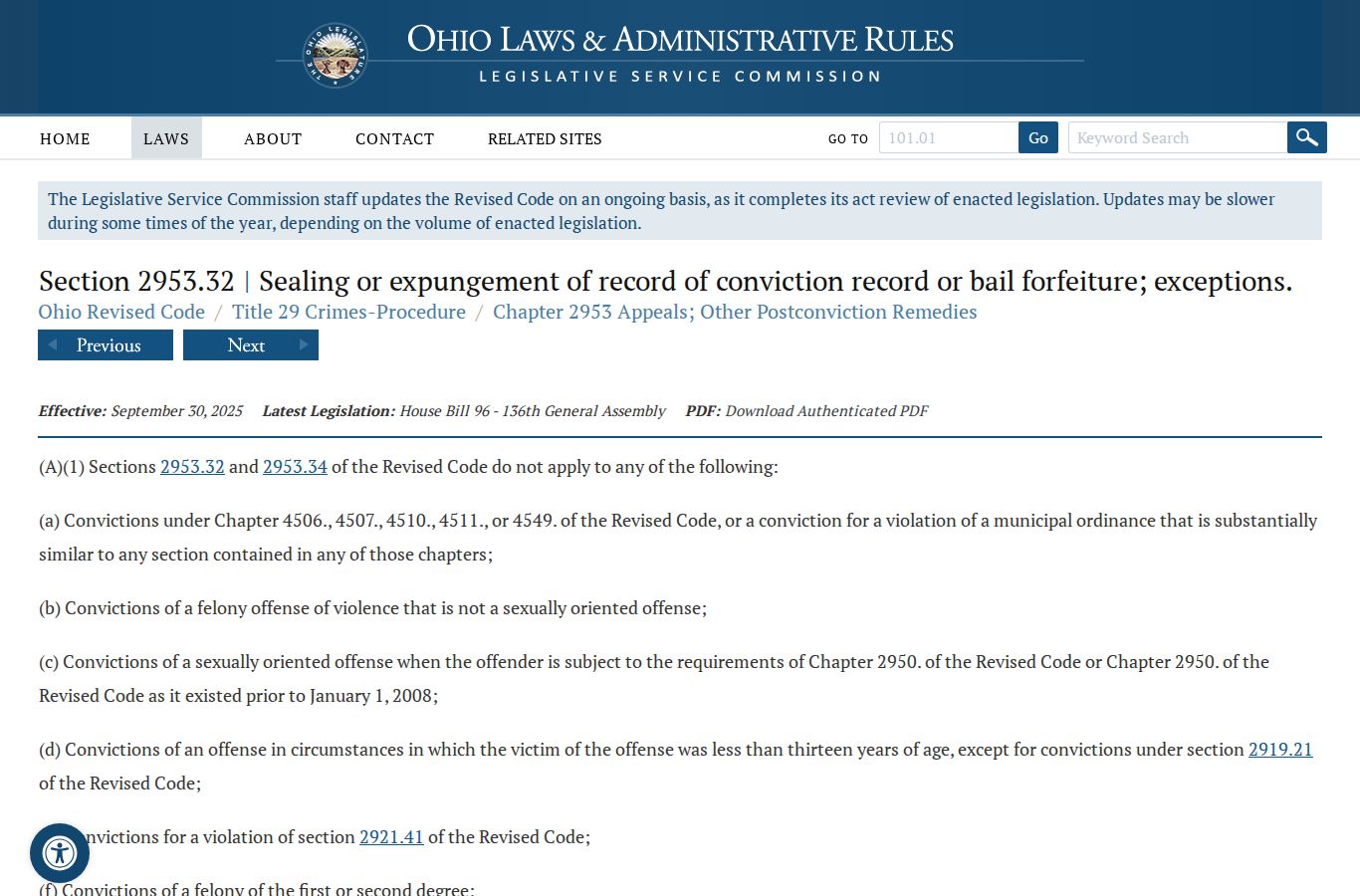
A sealing or expungement order can pull a case result out of public view long after the docket itself has closed. The statute spells out both the openings and the bars.
Courts That Hold Criminal Dockets
Hocking criminal records sit in different places depending on the case type. Felonies run through the Hocking County Court of Common Pleas and the Clerk Legal Division. Misdemeanors belong to the Hocking County Municipal Court. The Hocking County Juvenile Court keeps delinquency matters separate under its own access rules. One more wrinkle: the Clerk's Internet Inquiry also describes Hocking-origin Fourth District filings. But an appeal runs as its own appellate proceeding rather than part of the trial docket. That separation matters. Felonies, misdemeanors, and delinquency each live in their own docket.
| Hocking criminal channel | Records to start with | Local access route |
|---|---|---|
| Common Pleas General Division | Felony criminal filings | Internet Inquiry, Legal Division, and posted court calendars |
| Municipal Criminal Division | Misdemeanor criminal cases | Municipal Case Search and Municipal clerk channels |
| Juvenile Court | Juvenile delinquency matters | Separate court inquiry, subject to confidentiality rules |
Hocking Criminal Docket Court Split
The felony, misdemeanor, and juvenile split is a practical search rule. Common Pleas is not a backup search for every Municipal misdemeanor, and the Municipal form is not a public substitute for confidential juvenile material. The Juvenile and Probate court information identifies most juvenile records as confidential, with court-specific access rules controlling what may be released.
The Ohio Revised Code section 2151.356 provides the juvenile record-sealing source for this separate Hocking criminal docket channel.
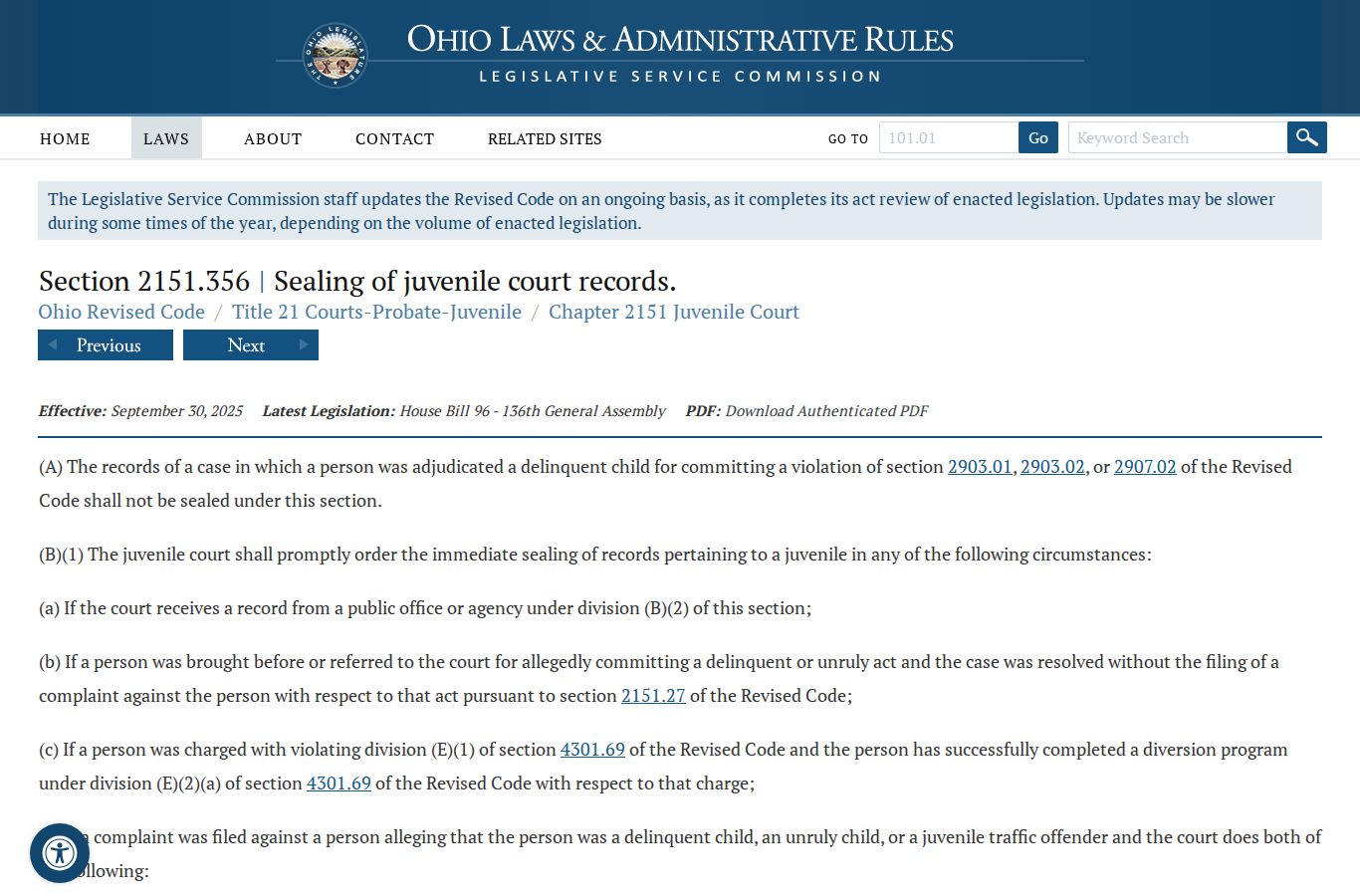
A similar adult charge might show up in a different Hocking court search. That does not make juvenile access public. Confidential juvenile records stay closed on their own terms.
Sealed Dockets and Public Access
Court rules and the kind of record sought control what the public can see. The Clerk states that its Internet Inquiry lets the public view covered case filings, and Local Rule 2 makes processed public e-filed documents available online. When the web route fails or cannot produce an unsealed document, the rule allows review at the Clerk's office by terminal, paper, or microfilm. The Legal Division sits at 1 East Main Street, and its phone is (740) 385-2616.
Public access never overrides a sealing order, an expungement order, a Rules of Superintendence restriction, or juvenile confidentiality. A search result is not a certified copy either. For official records, or for lawful questions about a restricted matter, ask the court or clerk that holds the file.
Key rules:
Ohio Rules of Superintendence 44 and 45 define court records and establish public-access and restriction procedures.
Ohio Revised Code section 2953.32 governs many criminal sealing and expungement applications.
Ohio Revised Code section 2151.356 addresses juvenile record sealing and provides no filing fee for a qualifying application.
Hocking Criminal Docket Continuances
A continuance moves a scheduled date only after the court grants it. The entry alone is not the answer. In Common Pleas criminal practice, a motion must list prior continuances, consent, any time waiver, the try-by date, and availability, with the required proposed entry attached. That try-by date is the deadline-related date Hocking demands in the request. The rules also allow a criminal motion hearing before trial. Absent good cause, motions are not considered on the day of trial.
- Try-by date
- The date-related item that Hocking requires in a Common Pleas criminal continuance motion.
- Proposed entry
- A draft court order submitted with a request when the local rule requires one.
- Nolle prosequi
- A prosecution request to discontinue a case. Hocking requires a motion stating grounds and a proposed judgment entry, or an oral hearing is scheduled.
Municipal trials work on a shorter clock. For a scheduled trial, the court requires a Motion and Entry for Continuance plus a time waiver at least 24 hours before trial. The party must then confirm whether the continuance was granted and tell subpoenaed witnesses about any new setting.